 chuck
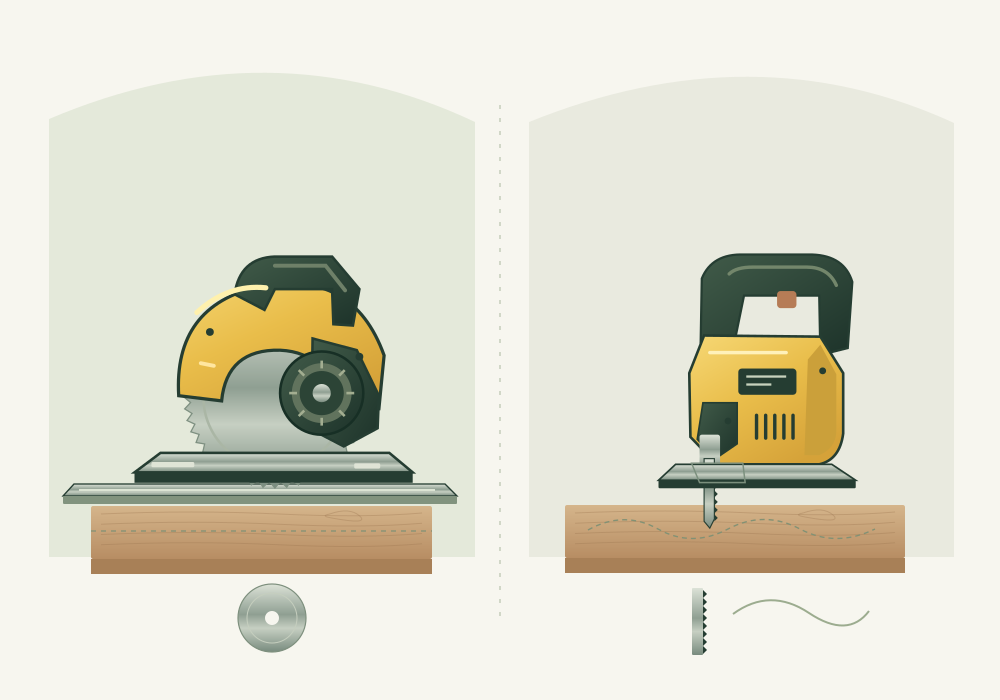
Educational guide based on our supplied DIY glossary. No hands-on testing or external source verification. Check current instructions for your exact tools and materials.
Describe the cut before choosing the saw
Begin with what you are cutting and the result you want. A straight cut across a timber board is different from a curved opening, a fine joint or cutting metal. Write down the material, its size and whether the cut will be visible. This helps you distinguish a general-purpose option from a specialist tool.
Also consider how you will support the piece and reach the cut. A saw may suit the material but be awkward in a narrow space or on a poorly supported workpiece. Buying a shorter or longer blade does not automatically solve access problems. The work needs a stable arrangement that allows the tool to be used as intended.
Understand teeth in context
Tooth form and spacing influence the work a saw is designed for. Fine and coarse are useful descriptions, but they do not rank every saw from worse to better. A blade intended for a particular material or finish can be a poor match for a different task. Read the maker’s stated applications rather than relying on the look of the teeth.
Crosscut and rip describe the direction of a timber cut relative to the grain. Some saws are intended for one approach, while others are sold for a broader range of work. The label should guide further checking, not encourage an assumption that every board and cut will behave alike. Material condition and workholding still matter.
Choose a family that suits the work
A general timber saw may cover straightforward board-cutting jobs, while a backed saw supports a different kind of controlled, often finer work. Tools for shaped cuts or specialist materials have their own blade arrangements and limitations. A hacksaw, for example, should not be selected as though it were simply a small version of a timber saw.
You do not need one of every type at the start. Look at the next few jobs and choose the family that genuinely covers them. If a project calls for a specialist cut you cannot support or control appropriately, consider whether buying another saw is the best solution. Help from someone with the right equipment and experience may be more useful.
Check the handle and the full blade
A secure grip matters more than decorative finish. Where possible, hold the saw and notice whether the handle allows a comfortable, controlled grip. Look at the relationship between the handle, blade and intended working position. Someone else’s favourite saw may not feel right in your hand, particularly when access is limited.
Check the blade for damage and read how it should be maintained or replaced. Some designs use replaceable blades; others are treated as a complete item when worn. Do not assume every tooth pattern can be sharpened in the same way. Intended maintenance and replacement availability affect ownership costs, especially if the tool will be used regularly.
Remember the material the cut removes
The kerf is the channel removed by the saw. When a finished size matters, the cut does not occupy an imaginary line with no width. Marking, measurement and deciding which side is waste are part of the work plan. This is one reason a careful layout and suitable support can matter more than buying a more elaborate tool.
An untidy edge is not always evidence that the saw is wrong, but it should not be dismissed automatically as user error either. The material, blade condition, tooth design and intended method all need to match. Check the instructions and practise an appropriate approach on suitable spare material where that is safe and relevant to the task.
Buy a usable setup
Include a way to mark the work, a suitable support and appropriate workholding in the plan. A saw on its own cannot make an unstable workpiece suitable. Check that the support arrangement allows the intended cut without placing hands or other objects in its path. Follow the tool’s instructions rather than copying an improvised setup from a photograph.
For occasional jobs, a dependable saw matched to the material may be enough. For frequent fine work, control, blade replacement and the range of intended cuts deserve more attention. Compare those requirements before adding tools to a set. The best starting point is a clear cutting brief, not the highest number of saws in the package.
The takeaway
- Choose the saw family for the material and intended cut.
- Read tooth descriptions in context rather than treating finer as always better.
- Plan marking, support and workholding as part of the purchase.